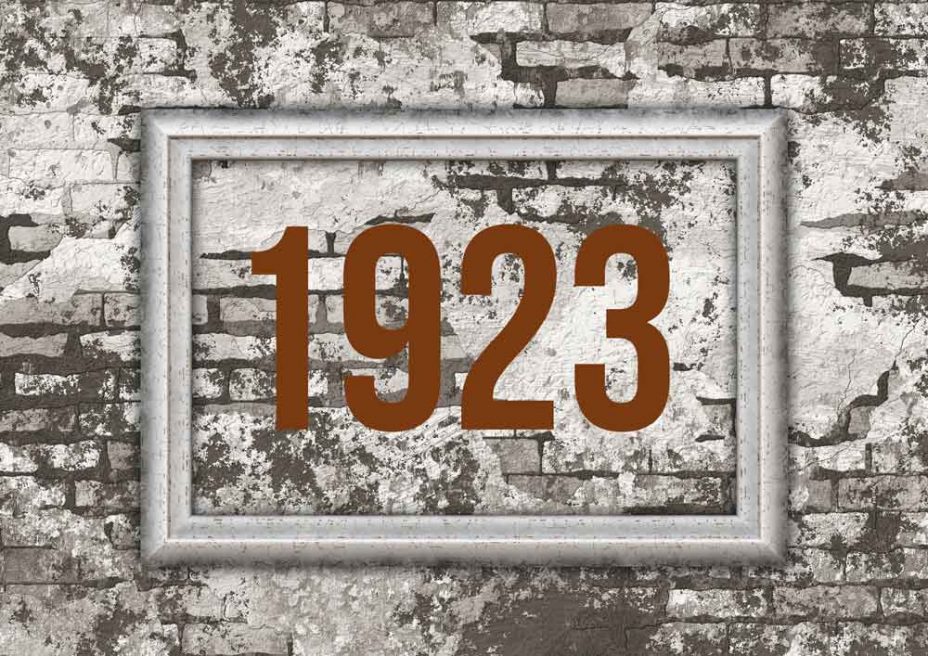
Number of the month of July: 1923
Homeowner democracy
The homeownership rate in Germany is around 50 percent (depending on the source, between 45 and 51%). This is the second-lowest rate among OECD countries. Yet, according to the housing study by the mortgage lender Interhyp, two-thirds of all renters would like to live in their own home. The situation is different in Great Britain, where the concept of "property-owning democracy," coined in 1923, has developed. Wouldn't that be something for Germany to consider?
In 1923, the British politician Noel Skelton coined the term "property-owning democracy." He saw the impoverishment of large segments of the population caused by industrialization as a threat to democracy. His proposal went beyond simply pacifying workers through access to land and home ownership. He envisioned a society comprised of many small homeowners or landowners. For him, genuine democratic participation of the masses could only be achieved in such a society.
Although this vision was later more or less forgotten, promoting homeownership has been part of the repertoire of British Conservatives ever since. The homeownership rate in Great Britain has risen steadily since then. From 22 percent in 1920, it climbed to 70 percent by 2002. While the financial crisis led to a slight decline, the rate still stands at 62 percent (2020). Perhaps it would be worthwhile for Germany to adapt the idea of homeownership democracy.
Photo: © Gerd Altmann/Pixabay.com
About the author

Harry Mohr
Real estate agent (Chamber of Industry and Commerce)Harry Mohr, author of this article