
How drones can make real estate marketing easier
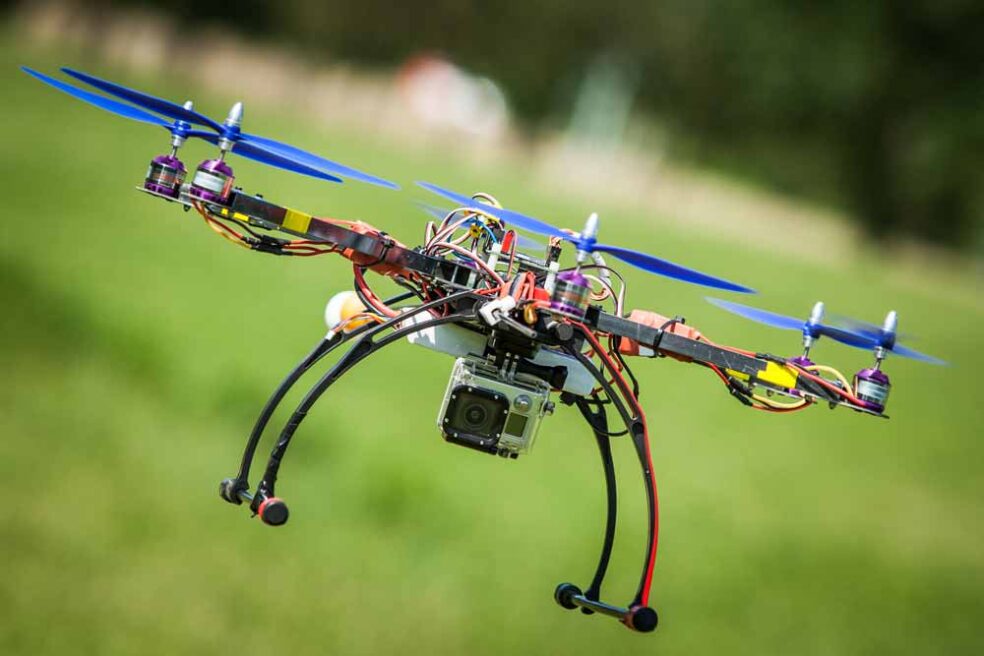
In recent years, the applications of drones have changed considerably. Initially popular only among amateur photographers, drones quickly found their way into the real estate industry, opening up new possibilities for property marketing. High-resolution aerial photographs that capture the entire property are just the beginning.
Just a few years ago, real estate professionals would have needed a helicopter to take aerial photos of properties. This was an expense that would only have been worthwhile for expensive luxury properties. Today, it's much simpler. With the help of drones, high-resolution aerial photos can be taken with minimal effort.
The added value for real estate professionals lies not only in the fact that aerial photos and videos, with their breathtaking perspectives, undoubtedly amaze many potential buyers. Aerial shots also offer a very practical advantage: they provide a complete overview of the entire property or building complexes. They reveal important details such as the floor plan, the location of access roads, the existing trees, and neighboring buildings. Furthermore, drones also highlight the advantages of the property's surroundings.
Perfect indoor shots thanks to drone
But drones aren't just important little helpers for exterior shots. They're also useful for interior photography. For example, they allow for camera movements that capture rooms from different perspectives. This footage is then usually used to create detailed 3D models of the property or virtual tours.
Drones primarily help real estate agents reach potential buyers from outside the local area. If a personal viewing isn't possible, the drone still provides a vivid impression of the property. Another advantage for the owner is that virtual tours or 3D viewings can help avoid mass viewings.
Drones could eliminate the tedious search for sales documents in the future
In the future, drones' functions could expand even further. They could then be used not only for photography but also for collecting specific data. As properties themselves become increasingly "smart," drones could play a crucial role in the digitalization of real estate sales. For example, they could be used to conduct digital measurements at points that are difficult for humans to access. Floor plans, cadastral maps, energy performance certificates, and other documents that currently have to be painstakingly gathered before a sale might soon become a thing of the past, because all the information—thanks to the networking of the property and its measurement points via drone—would be available digitally in real time. The manual incorporation of this information into a property listing would also be eliminated.
Currently, it's not worthwhile for most real estate agents to purchase a drone. This is because drone flights are subject to legal regulations. These regulations make drone operation more complex than one might initially assume. However, there are plenty of external providers who specialize in drone-based real estate marketing and are familiar with the legal requirements.
Are you looking for support to market your property nationwide using spectacular drone footage? Contact us! We'd be happy to advise you.
Further information can be found here:
https://de.wikipedia.org/wiki/Luftbildfotografie
https://www.test.de/Drohnen-und-Recht-Das-muessen-Hobbypiloten-wissen-4727469-0/
Photo: alexsalcedo/Depositphoto©
About the author

Harry Mohr
Real estate agent (Chamber of Industry and Commerce)Harry Mohr, author of this article