
How real estate financing works now
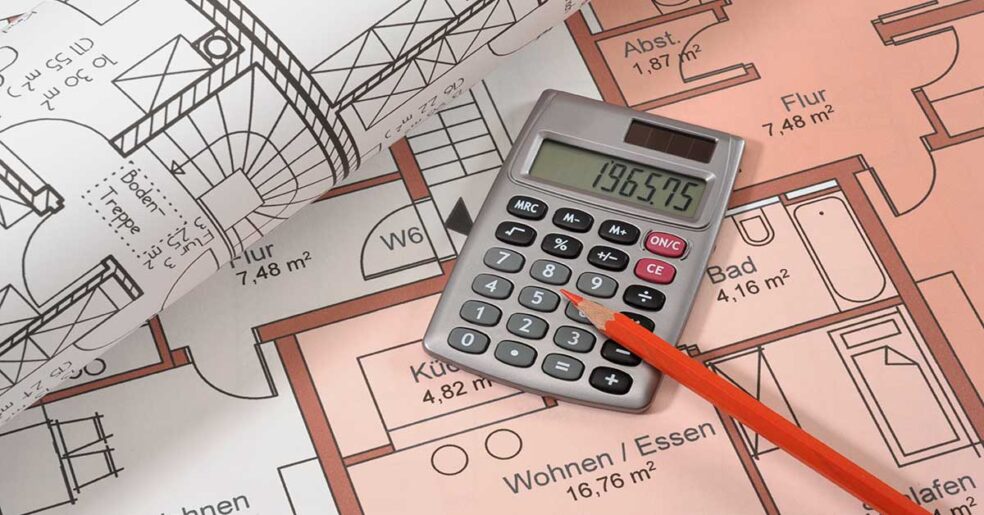
Many banks have tightened their lending criteria for real estate financing. For many who would like to buy a property, homeownership currently seems unrealistic. However, it is still possible. It all comes down to careful planning when financing your property. Here's what you should consider.
Many prospective buyers are hesitant when it comes to property offers. Inflation and rising interest rates have led to a decline in property inquiries. This has prompted many sellers to lower their property prices to make them more affordable for buyers.
Nevertheless, some sellers are finding it difficult to attract buyers. Therefore, it can be worthwhile for prospective buyers to disclose their financing options. This makes it easier for sellers to respond to current market changes. Otherwise, the property risks becoming a white elephant. However, before making an offer, financing should be arranged with the bank.
Equity capital
Sufficient equity is necessary for purchasing real estate. Financing experts recommend an equity stake of 20 to 30 percent of the property's purchase price. This must also cover closing costs such as notary fees, land registry fees, real estate agent commissions, and property transfer tax.
The more equity you bring to the table, the easier it is to buy a house or apartment, and the more willing banks are to grant you a loan. This also affects the financing terms. Increasingly, family members are also helping to provide more equity through private loans or inheritances.
Planning financing
Thorough planning is essential. Start early. Calculate precisely how much property you can afford. The amount of your down payment and your net household income are indicators of how much a property can cost. Beyond that, your regular income also plays a crucial role.
For this, seek advice from both an independent financial expert and an experienced real estate professional. A local, reputable real estate agent can tell you where to find a property that fits your budget.
The financing expert will advise you on the loan amount, term, and repayment method. They will also help you compare financing offers to find the one that best suits your needs.
Use funding
Buyers of energy-efficient properties can apply for government subsidies. These can vary, for example in the form of allowances, tax advantages, lower interest rates, or even non-repayable grants.
It's worth checking whether you can benefit from a Riester pension scheme for homeownership , a low-interest loan from the KfW (German Development Bank) , funding from the Federal Office for Economic Affairs and Export Control (BAFA) for renewable energy, or regional funding programs. Financing, energy, and real estate consultants can help you with this.
Are you looking for support with financing a property? Contact us! We'd be happy to advise you.
Notes
For the sake of readability, this text uses the generic masculine form. Female and other gender identities are explicitly included where relevant to the statement.
Legal notice: This article does not constitute tax or legal advice for any specific case. Please consult a lawyer and/or tax advisor to clarify the facts of your individual situation.
Photo: © filmfoto/Depositphotos.com
About the author

Harry Mohr
Real estate agent (Chamber of Industry and Commerce)Harry Mohr, author of this article