
Urban villages: The new desire for the countryside
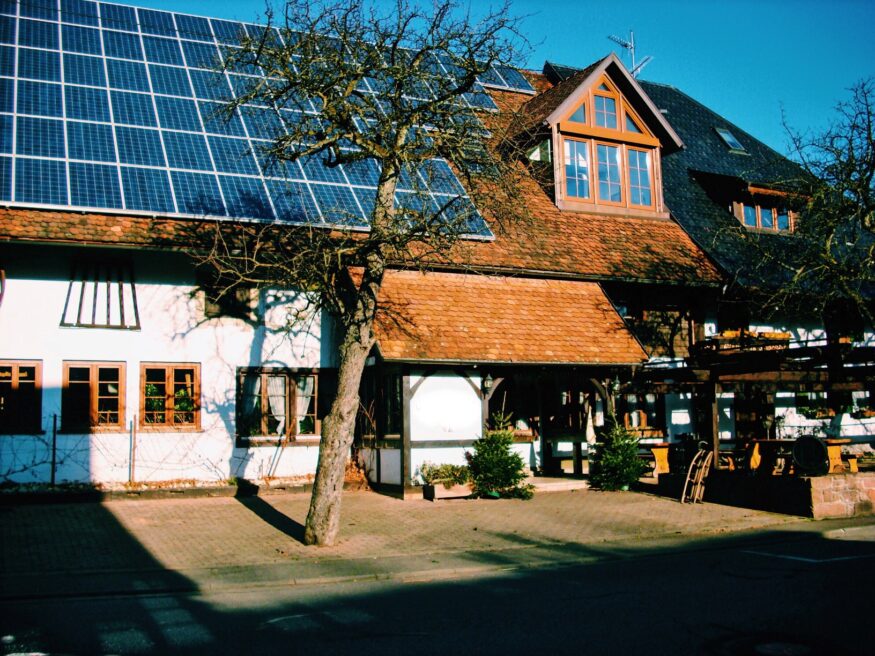
While finding suitable and affordable housing is becoming increasingly difficult in German cities, rural areas, especially in the former West Germany, are suffering from depopulation. For years, politicians have been searching for ways to counteract this trend, but rural living cannot simply be mandated. The increasing prevalence of higher education has further intensified this trend. Working professionals live and work in cities, and those starting families tend to move, at best, to the increasingly expensive commuter belts surrounding major cities.
But now there are small communities that are deliberately attracting young urbanites. Reiner Klingholz, head of the Berlin Institute for Population and Development, calls them "cubes of bacon in the middle of a shrinking urban area." And there are innovative people like digital project manager Philipp Hentschel, who wants to get out of the city with his family, where it's becoming increasingly cramped, crowded, and expensive. Together with like-minded Berliners, he founded a cooperative and is currently converting a dilapidated manor house in the village of Prädikow in Brandenburg into a residential and work space. It will provide accommodation for 60 to 100 adults and children – and there's more than enough space for that on the large, four-sided farmstead with its nine hectares of land.
The Prädikow farm is one of 18 projects examined by the Berlin Institute for Population and Development in its study "Urban Villages – How Digital Work Can Bring City Dwellers to the Countryside." The researchers wanted to know for whom moving to the countryside is actually attractive and what kind of support these people need. Some of the projects are still in their early stages, while others are already firmly established in everyday village life.
Digital work is possible everywhere.
Those fleeing the city are by no means just nostalgic romantics of brick-and-mortar architecture; people like Philipp Hentschel are eager to reinvent rural life with energy and commitment. Paradoxically, those who grew up in the digital world of work are best positioned to escape the city, since digital work can take place anywhere. Thus, it is primarily academics working in creative and knowledge-based professions who are discovering the countryside as a new place to live – and in doing so, creating new forms of communal living and working.
Freelancers and self-employed individuals such as media designers, architects, and journalists can take their work to rural areas and share office space there to avoid working alone in front of a computer. However, this requires a good internet connection, which, despite promises to the contrary from the federal government, is by no means universally available.
Others are looking for new jobs in rural areas, because nobody wants to commute long-term. Still others are using the opportunity for a career change. For example, Philipp Hentschel's wife, formerly a programmer, has retrained as a carpenter.
Impulses for village development.
Local communities also benefit from the revitalization of old factories, mills, monasteries, and estates, as these are dilapidated buildings that the municipalities would otherwise have to demolish at their own expense. But that's not all; city dwellers also bring ideas and impetus for rural development, as they want to actively shape their new surroundings.
In "Village 4.0," not only are digital workspaces emerging, but also new meeting places for villagers and newcomers. City dwellers are opening cafés and farm shops, organizing cultural festivals, or launching initiatives for local food supply. The newcomers' children are helping to save some village kindergartens.
Some places have become so well-known through their new residents and offerings that "city dwellers flock to the old nursery on weekends to drink coffee, visit the exhibition of local artists and finally buy the freshly harvested vegetables from the local permaculture garden," the study states.
Although the projects examined do not guarantee a trend reversal, the authors of the study admit that with the support of a policy that recognizes the signs of the times, a structural change towards a greater balance between city and country could succeed.
The study, published in August 2019 by the Berlin Institute for Population and Development and Neuland21 eV, can be found at www.berlininstitut.org/publikationen
About the author
Harry Mohr
Real estate agent (Chamber of Industry and Commerce)Harry Mohr, author of this article