No turnaround in sight
Property prices continue to rise, according to the Postbank Housing Atlas 2020. Over 90 percent of all German districts and independent cities recorded higher purchase prices. The price differences between older and newer properties in some cities and
districts are particularly noteworthy. The Housing Atlas also shows where it is worthwhile to invest in existing buildings.
With an average increase of 9.3 percent (adjusted for inflation), prices in 2019 rose even more sharply than in the previous year, and not only in major cities but also in some rural areas. Demand for real estate in the commuter belts,
the outer districts of large cities, is also high.
The price rally continues
“Low interest rates, high demand, and limited supply – these were the main drivers of prices in the real estate market in 2019 as well. A turnaround is not currently in sight in most regions of Germany,” says Eva Grunwald, Head of Real Estate at Postbank. On average across Germany, a 70-square-meter existing apartment is around €89,400 cheaper than a new-build apartment (built from 2017 onwards). The price difference is greatest in Stuttgart, where buyers of existing properties save almost €166,000. The difference is similarly high in Düsseldorf, followed by
Frankfurt am Main (over €133,000), Berlin (almost €110,000), and Munich (almost €105,000). Buyers in Cologne can expect to save around €100,000. Buying a new apartment is less expensive in Hamburg, where the price difference is around €80,500.
The most expensive district is North Frisia
The housing atlas also illustrates price differences between districts. Nine of the ten most expensive regions are located in Bavaria. The district of Miesbach leads the pack, followed by Starnberg, Munich (district), and Fürstenfeldbruck. In Miesbach, a square meter in the mid-price segment for new construction costs €9,400. Here, a buyer of a 70-square-meter existing apartment can even save over €263,000.
However, the most expensive district is located in the north, where prices along the coast have risen sharply: North Frisia in Schleswig-Holstein, with the islands of Sylt, Föhr and Amrum, is in first place with a price of 6,450 euros per square meter and a purchase price increase of over 14 percent.
Property prices in three districts in Brandenburg have risen disproportionately, by up to 48 percent, despite being relatively low overall – due to a limited supply. The Uckermark district recorded the strongest increase nationwide, with prices reaching almost €1,700 per square meter.
"The strongest price increases of the past year are therefore not to be found in the metropolises and their suburban areas, but in less densely populated regions with a small and rather cheap supply of real estate," is the conclusion of the studies for the housing atlas.
Munich remains at the top
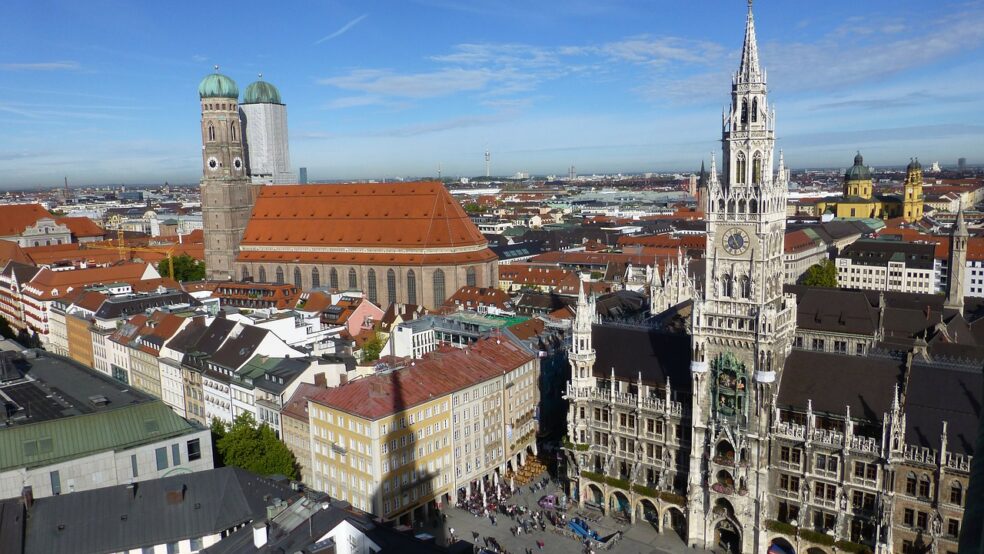
Munich continues to lead the ranking of Germany's "Big Seven" metropolitan areas. In the Bavarian capital, the price per square meter of existing properties rose again in 2019 by 6.2 percent compared to the previous year, now exceeding €8,000. Frankfurt am Main ranks second among the most expensive major cities, having seen the strongest price increases. At nearly €5,700 per square meter, it costs eleven percent more than the previous year. In Hamburg, buyers must pay an average of €5,054 per square meter. The federal capital, Berlin, overtakes Stuttgart (€4,590 per square meter) with €4,640 per square meter – almost ten percent more than the previous year – and thus ranks fourth.
Sources: Postbank Housing Atlas, in cooperation with the Hamburg Institute of International Economics (HWWI). 401 cities and districts were examined for the study series.
About the author

Harry Mohr
Real estate agent (Chamber of Industry and Commerce)Harry Mohr, author of this article