
Tip! Proper ventilation in winter
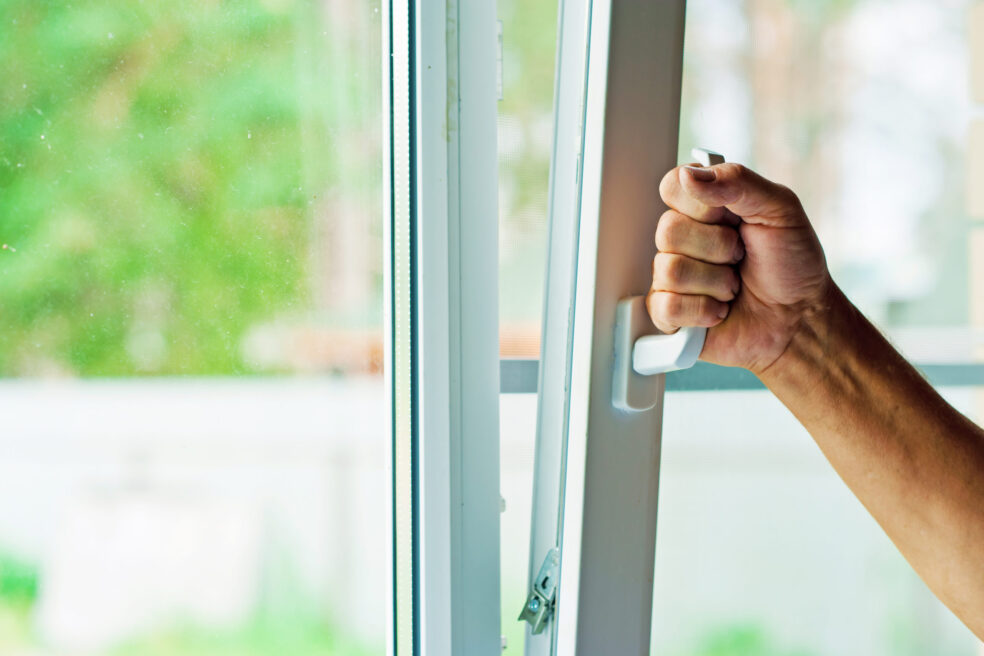

This gives mold no chance
Proper ventilation is especially important during the colder months. To prevent mold growth and save on energy costs, you should ventilate by opening windows wide for five minutes at least twice a day. A good rule of thumb is to open windows wide for five minutes when the outside temperature is below 0 degrees Celsius and for ten minutes when it's up to 10 degrees Celsius. Ideally, create a cross breeze by also opening interior doors and windows on opposite sides of the room.
Ventilation is recommended when the humidity in the room exceeds 60 percent; you can monitor this with a hygrometer (available at hardware stores). "Humidity spikes" in the kitchen and bathroom from showering, bathing, or cooking should ideally be vented outside immediately with the door closed. If your bathroom doesn't have a window, the entire apartment must be ventilated to prevent the humid air from condensing in the other rooms.
Leaving windows permanently tilted cools down the rooms. Tilting them is only advisable if laundry needs to be dried indoors. Keep the room door closed while doing so! Since warmer air holds more moisture than cold air, cooler rooms (usually the bedroom) need to be ventilated more frequently and thoroughly.
Caution after renovations: If the windows have been replaced but the exterior walls have not been insulated, increased moisture can occur.
Tips for proper heating and ventilation
Most often, mold infestation and black spots are caused by the tenant himself, because he has not heated or ventilated enough.
- Even in autumn and spring, the following temperatures be maintained when people are present: 20 degrees Celsius in the living room, children's room, and kitchen; 21 degrees Celsius in the bathroom; and 14 degrees Celsius in the bedroom at night. As a rule of thumb: the cooler the room temperature, the more frequently it needs to be ventilated.
- the heating off completely during the day, even when you're away. Constantly cooling down and reheating is more expensive than maintaining a lower average temperature.
- interior doors between differently heated rooms closed day and night.
- Do not heat the bedroom from the living room. The so-called " overflow" of heat from an unheated bedroom only brings warm, and therefore humid, air into the bedroom; this air then condenses there.
- Proper ventilation also means opening the windows fully for a short time – 5 minutes. This is called shock ventilation . Tilting the windows is ineffective and wastes heating energy.
- air exchange in the apartment in the morning . Ideally, create a cross breeze; otherwise, open the windows wide in every room.
- The ventilation time
- 15-minute burst of ventilation is usually sufficient .
- The colder it is outside, the shorter the ventilation time needs to be.
- Ventilating once a day is not enough. Rooms where people have been should be ventilated again in the morning and afternoon.
- Perform a complete air exchange in the evening, including in the bedroom.
- Don't ventilate from one room to another, but ventilate to the outside .
- If the bathroom is an interior room without a window, ventilate via the shortest route (through another room). Keep the other doors closed.
- Especially after bathing or showering, the water vapor should not spread evenly throughout the apartment.
- large amounts of water vapor (e.g., from cooking) to the outside as soon as possible. Close the room doors to prevent the steam from spreading throughout the apartment.
- If laundry has to be dried indoors because there's no drying room, ventilate the room more frequently. Keep room doors closed.
- after ironing .
- Ventilate even in rainy weather. Unless it's actually raining in through the window, the cold outside air is still drier than the warm indoor air.
- Humidifiers are almost always unnecessary.
- If you're away for several days, ventilating during the day is obviously not possible, but also not necessary. In this case, it's sufficient to ventilate properly in the morning and evening.
- With new, particularly airtight double-glazed windows, ventilate more frequently than before. Even then, you'll save on heating energy compared to old windows.
- Large cabinets should not be placed too close to critical walls. However, a gap of two to four centimeters should be sufficient.
About the author

Harry Mohr
Real estate agent (Chamber of Industry and Commerce)Harry Mohr, author of this article