
The time for sowing has come!
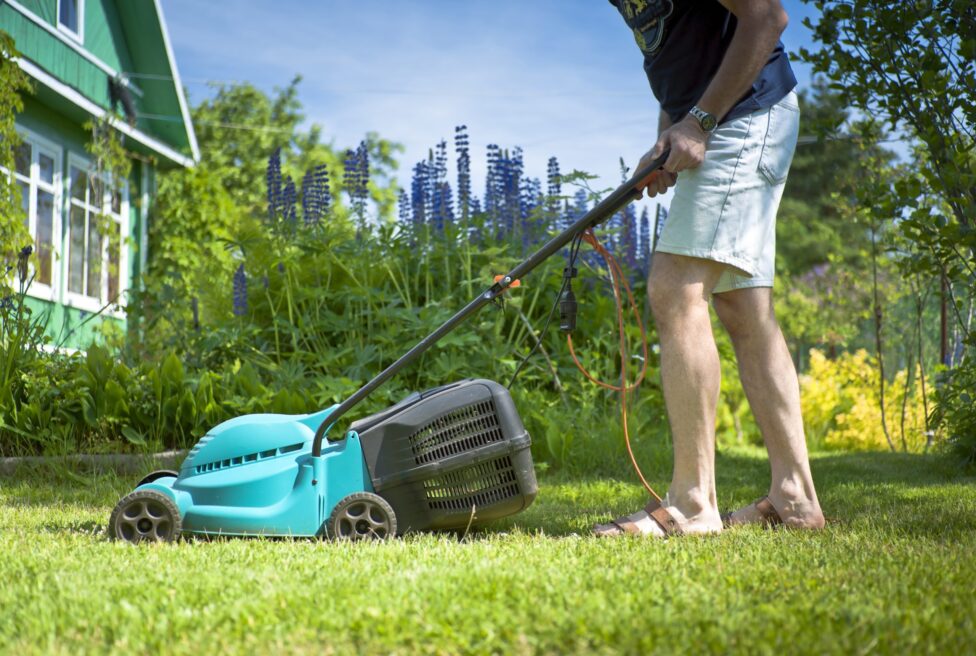
A green and evenly dense lawn is the pride of many gardening enthusiasts and can be achieved by following a few rules when establishing a new lawn, as well as through proper fertilization and maintenance. To lay the foundation for a healthy and beautiful lawn, several points should be considered even before sowing the seeds.
Laying a new lawn
For a lawn to thrive and grow evenly, thorough preparation of the area intended for sowing is essential. If the soil is too heavy (clayey), it needs to be improved by mixing in sand to make it more aerated and permeable. Conversely, if the soil contains too much sand, compost should be added, which will ensure better water and nutrient retention. After these preparations, the soil should be allowed to settle for a few weeks.
Sowing a Lawn:
If you pay attention to a few points when sowing a lawn, you'll get more enjoyment from it.
Before sowing, stones and weeds of any kind must be removed, and the soil should be loosened by hand to make it crumbly. To loosen the soil and improve its structure, green manure is recommended, which also stores valuable nutrients such as nitrogen in the soil. This is usually done in spring, with the growth dug under in August, and the lawn can then be sown in September.
If no green manure sowing is carried out, the lawn can generally be sown in the months of May to September, however this should not be done too early, as optimal germination is only possible from a soil temperature of about 10 degrees Celsius.
Months with excessively intense sunlight should also be avoided. Sowing is best done in calm weather and should be evenly distributed, once crosswise and once lengthwise. When sowing grass seed, it is important not to use too much seed at once, as this can hinder the grass's development and lead to fungal diseases. A typical seeding rate is about 25 grams per square meter.
Choosing the right seed is also crucial. Cheap forage grasses are not recommended, as they will not produce a high-quality lawn. To gain an overview of the many varieties and their characteristics, it is advisable to seek professional advice.
Germination and watering of the lawn seed
After sowing, the seeds are lightly spread with a rake, ensuring they remain mostly visible on the surface, as the grass needs light to germinate. Especially at the beginning of the growth phase, it is important that the fertilizer contains plenty of phosphorus, which promotes dense, green growth. Special starter fertilizers for lawn seed are available commercially.
Germination times vary depending on the type of grass. It can easily take two weeks for the first grass seeds to germinate. Commercially available grass seed mixtures typically contain a blend of different grass varieties with varying germination times. It can take up to four weeks for all the seeds to germinate completely.
Especially during this phase, when the root systems are not yet fully developed, a regular water supply must be ensured. However, care must be taken to ensure that the amount of water is not so high as to cause harmful waterlogging. In dry conditions, the area should be watered several times a day for 5 to 10 minutes.
The first mowing after sowing the lawn
The lawn is mowed for the first time when it reaches a height of about 10 to 15 centimeters. However, it's hardly accurate to call it mowing; it's more like just trimming the tips. The grass should not be cut shorter than eight to ten centimeters for this first mowing.
The second mowing can then cut the grass down to a length of 6 cm.
If these mowing tips are followed, the newly laid lawn has the chance to grow densely and form strong roots.
By the way: You can walk on the new lawn for the first time once it reaches a length of 5 cm. However, it's better to wait until the first mowing before walking on it. The delicate grass plants are quite sensitive at first.
Further lawn care
Reel mowers
deliver a first-class cut.
The lawn should be mowed regularly starting in April. Reel mowers are preferable to rotary mowers. It is essential that the lawnmower has a sharp blade. No more than 40 to 50 percent, ideally only 30 percent, of the grass height should be cut. At least 3.5 centimeters should remain. The grass clippings should be removed, or only a very small amount should be left on the lawn.
Generally, lawns should be watered infrequently but thoroughly rather than frequently and with small amounts. Ideally, this should be done once a week, preferably at night or in the early morning. Proper fertilization, which should be carried out about three to five times a year, is also important for a consistently beautiful lawn. Special lawn fertilizer is suitable for this purpose.
It is advisable to scarify (scratch the turf) once or twice a year. This removes old clippings and moss, aerates the soil, and is usually best done in spring. The lawn should then be fertilized.
About the author

Harry Mohr
Real estate agent (Chamber of Industry and Commerce)Harry Mohr, author of this article