Simply go one step further – 100,000 roofs initiative against the housing shortage in metropolitan areas
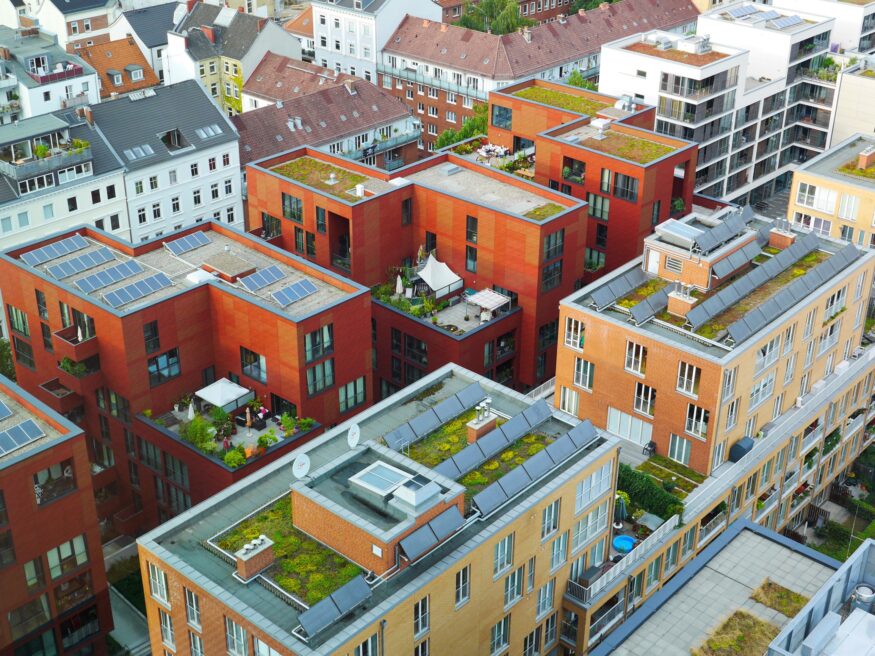
Creating attractive new and affordable housing in growth regions: That is the goal of the nationwide "100,000 Roofs" initiative, launched by, among others, the Federal Association of German Housing and Real Estate Companies (GdW). More than one million additional apartments are to be created through rooftop additions in densely populated areas.
As is widely known, Germany suffers from a shortage of affordable housing. According to a study by the Cologne Institute for Economic Research (IW), Germany will be short 385,000 new apartments annually until 2020. Given the steadily increasing demand, the housing market is particularly strained in metropolitan areas, large cities, and university towns. Moreover, less than 30 percent of Germany's total housing stock is located in these urban centers.
While the number of completed apartments and building permits in Germany has risen steadily in recent years, this is far from sufficient, according to study author Michael Voigtländer. "We don't expect construction activity in major cities to reach the required level of completed projects." This refers primarily to metropolitan areas like Berlin, Frankfurt, Stuttgart, and Munich. The logical consequence of this imbalance between supply and demand is that real estate prices continue to rise.
Over one million additional homes
To counteract this trend, the Federal Association of German Housing and Real Estate Companies (GdW), the Federal Association of the Gypsum Industry (GIPS) and the FMI German Mineral Wool Industry Association (FMI) now want to aim high: A total of over one million additional apartments are to be created by simply adding another floor in densely populated areas.
The social and economic advantages are clear: Adding stories to existing buildings can help create affordable housing, especially in urban areas, since there are no land costs. Energy-optimized additions also improve the overall energy efficiency of the building, thus contributing to climate protection. Another environmental benefit: Green spaces remain unpaved, as no additional building land is required.
Political support is needed
The potential is significant, but the strict regulations regarding minimum distances and compensatory measures, parking space requirements, and fire safety are hardly conducive to encouraging builders. Therefore, "100,000 Roofs" is a political initiative that is urging support from policymakers at the municipal, state, and federal levels. Homeowners need more flexible building regulations and economically favorable conditions to be encouraged to create living space through extensions and attic conversions. "Economic incentives are needed so that the additional costs associated with planning and construction of attic extensions can be at least partially offset," say the initiators.
Sources: web.gdw.de, verbaende.com, bbu.de, vermieter-ratgeber.de
About the author

Harry Mohr
Real estate agent (Chamber of Industry and Commerce)Harry Mohr, author of this article