Dividing a property in a divorce – what options are there?
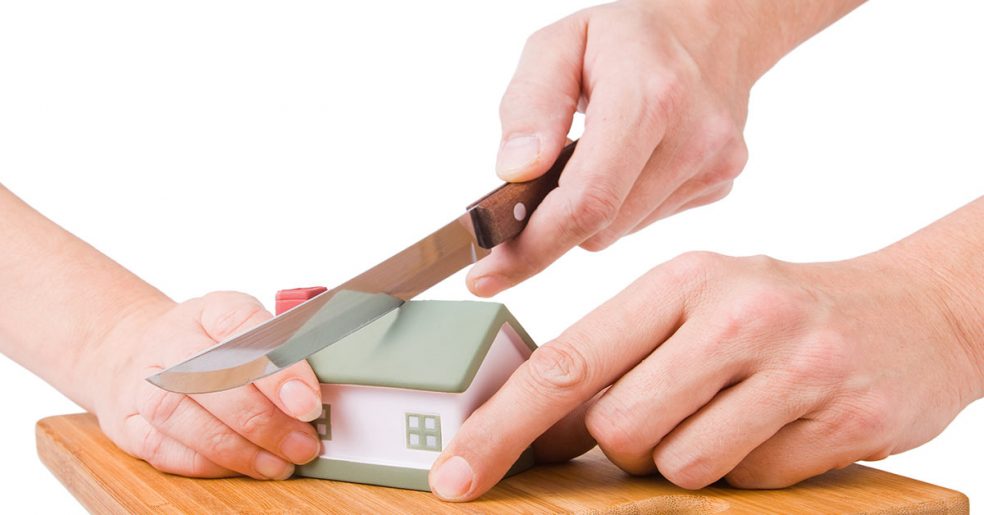
When a couple divorces and owns a jointly occupied property, many challenges must be overcome. Above all, the question of what options for dividing the property exist and what problems might arise needs to be answered. To keep track of everything, it's worth taking a look at our overview.
Basically, there are four options for dividing a property after a divorce: 1. the property is sold, 2. the property is retained as joint property, 3. one partner takes sole ownership of the property, or 4. the property is transferred to the children as a gift or inheritance. Each option has its advantages and disadvantages.
Sale of the property
Since, for example, debts incurred for financing can be paid off, selling the property definitely makes sense. Furthermore, both partners receive half of the sale proceeds and can thus make a fresh start. However, be careful: the bank will demand a prepayment penalty if you repay the loans before the end of the fixed interest period. Speculation tax may also apply if you have lived in the house or apartment for less than ten years. If the parties cannot reach an agreement regarding the sale, a forced sale by auction may be imposed. This, in turn, can negatively impact the sale proceeds.
Keep the property and rent it out
If the property is to be inherited within the family later, renting it out makes sense. A disadvantage is certainly that you will still have to take care of the property. In addition, there will be costs for repairs and management. Overall, renting is only advisable if both partners are in complete agreement about who will be responsible for what. Any existing loan should also be able to be serviced with the rental income.
If someone stays to live there
If one partner wishes to continue living in the property, they pay the rent to their ex-partner, or it can be offset against alimony payments. If the former shared home is not yet fully paid off, both partners remain liable for the loan repayments. The bank does not split the debt 50/50. This means that if one partner can no longer pay, the other is responsible for the entire remaining debt. This can lead to foreclosure.
It can also become financially overwhelming if one party buys out the other to take sole ownership of the property. All the aforementioned financial aspects must also be considered when gifting the property to children. A real estate agent can advise you on the best course of action from all angles.
Are you unsure what to do with your jointly owned property after your divorce? Contact us! We'd be happy to advise you.
You can find more information here
https://de.wikipedia.org/wiki/Scheidung
https://www.familienrechtsinfo.de/scheidung/haus-bei-scheidung/
Notes
For the sake of readability, this text uses the generic masculine form. Female and other gender identities are explicitly included where relevant to the statement.
Legal notice: This article does not constitute tax or legal advice for any specific case. Please consult a lawyer and/or tax advisor to clarify the facts of your individual situation.
Photo: © kotomiti/depositfotos.com
About the author

Harry Mohr
Real estate agent (Chamber of Industry and Commerce)Harry Mohr, author of this article