Property in a divorce — what can I do?
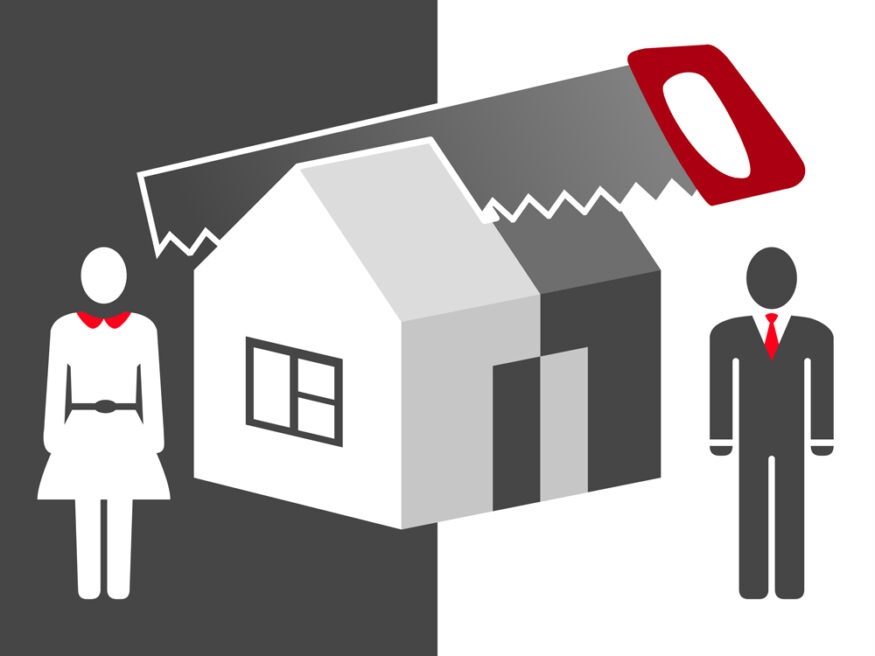
As with many other processes of change, the question arises during a divorce: What do we do with our property? This question is rarely easy to answer, as the right solution depends on various factors. Does the couple have children? Does one of them want to remain living in the property? Or, who owns what share of the property?
Imagine a couple who bought a small house together a few years ago, shortly after their wedding. They now have two children. The children live with their mother. The house belongs to them both in equal shares. And like many couples, they never considered separating and therefore didn't have a prenuptial agreement. Unsure what to do with their property, they consult a professional real estate agent who presents them with the following options:
The mother could remain living in the property with the children. The former partners could then agree on whether she pays rent to her ex-husband, whether she remains in the property without further payments, or whether the rent payments are offset against the mortgage or alimony costs. In this case, the real estate expert recommends seeking additional legal advice.
The mother could also buy out the father. To determine the amount of the payout, the property's value would be offset against the outstanding debt, meaning the mortgages and loans still owed. Let's assume the house was purchased ten years ago, is worth €300,000, and €100,000 has already been paid off. The mother would now have to bear the remaining €200,000 alone. She would also have to pay half of the €100,000 already paid to her ex-husband. However, the question arises whether she can afford this solution. Often, this arrangement is too expensive for one partner to manage alone.
Another option would be to transfer the house to the children as a preliminary inheritance or gift. This would also allow the mother to continue living in the property with the children. The mother could then act as the children's guardian and have control over the house until they turn 18. However, this solution is generally better suited to one child, as disputes could arise later with two children.
The house could also be divided into two apartments by both parties, with each ex-partner continuing to live in one of them. This option is suitable if both partners still get along well and are willing to live near each other. However, the division requires approval from the local council. Additionally, the division must be registered in the land register.
It's also conceivable that the property could be rented out and both ex-partners could share the rental income. If one of their children later wants to live in the property, this could be a suitable solution.
The ex-partners can, of course, also sell the property and split the proceeds. Many couples prefer this solution. It's important that the property's value is professionally assessed, as both partners intend to use the proceeds to start their new lives.
If the two parties cannot agree on any of these solutions, a forced sale by auction is likely. One of the partners must apply for this at the local court if they wish to force a resolution of the property issue. However, real estate professionals advise against this solution, as it generally results in a lower sale price.
Are you going through a divorce and unsure which option is right for your property? Contact us! We'd be happy to advise you.
Legal notice: This article does not constitute tax or legal advice for any specific case. Please consult a lawyer and/or tax advisor to clarify the facts of your individual situation.
Photo: © Mogil/Depositphotos.com
About the author

Harry Mohr
Real estate agent (Chamber of Industry and Commerce)Harry Mohr, author of this article