
No right of way based on custom
Long-standing custom does not create a right to cross a neighbor's property to reach one's own. This was decided by the Federal Court of Justice (BGH) in a recent ruling.
“‘But we’ve always done it this way’ is a frequently used argument when behavioral changes are suggested or demanded. However, a legal right cannot automatically be derived from years of habit.”.
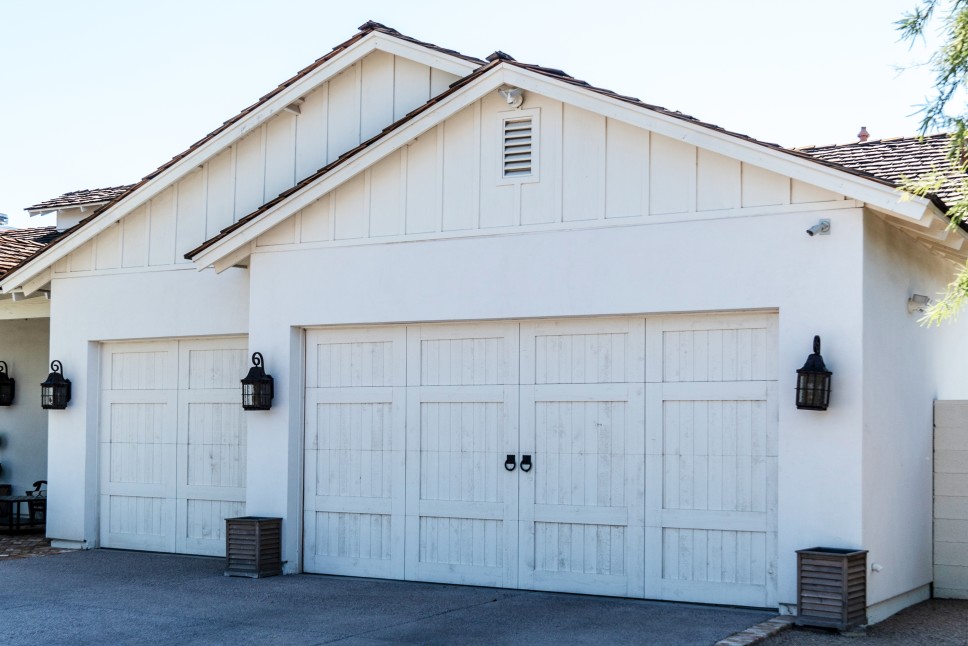
The owners of three houses in Aachen could only access their garages by driving across the neighboring property. The houses are built in a row along the street, with the garages located at the rear of the houses.
This went smoothly for decades until, after a change of ownership, the new neighbor began building a lockable gate to block the path and prevent further crossing of her property. The other two neighbors sued, invoking their customary rights.
The Higher Regional Court (OLG) of Cologne ruled in favor of the plaintiffs and granted them a right of way based on custom: The court found that customary law existing “independently of written legal norms” is widely recognized, provided that there is “a long-standing actual practice and the conviction of the relevant traffic circles”.
So, no gate and no lock then? The defendant owner did not accept the ruling, and the case eventually went before the Federal Court of Justice (BGH) in Karlsruhe. The BGH overturned the ruling of the Higher Regional Court of Cologne and decided that the two plaintiff neighbors could not invoke customary law (Case No. V ZR 155/18).
While the Federal Court of Justice (BGH) acknowledged that unwritten customary law does exist, it stated that this applies as a general rule only to a larger group of parties involved, such as an entire municipality. According to the BGH, customary law for individual cases does not exist.
Senate President Christina Stresemann traced the widespread belief that one could "acquire" a right of way over many years back to the Prussian General Land Law of 1794, which did indeed contain such a provision. However, the German Civil Code (BGB) put an end to this 120 years ago.
The case now returns to the Higher Regional Court, which must examine whether the plaintiffs might be entitled to a right of way by necessity pursuant to Section 917 Paragraph 1 of the German Civil Code (BGB). However, this is unlikely, especially since the plaintiffs' garages are not approved under building regulations.
Sources: bundesgerichtshof.de, sueddeutsche.de, faz.net, news.immobilienwelt.de
About the author

Harry Mohr
Real estate agent (Chamber of Industry and Commerce)Harry Mohr, author of this article