
New heating subsidies 2024
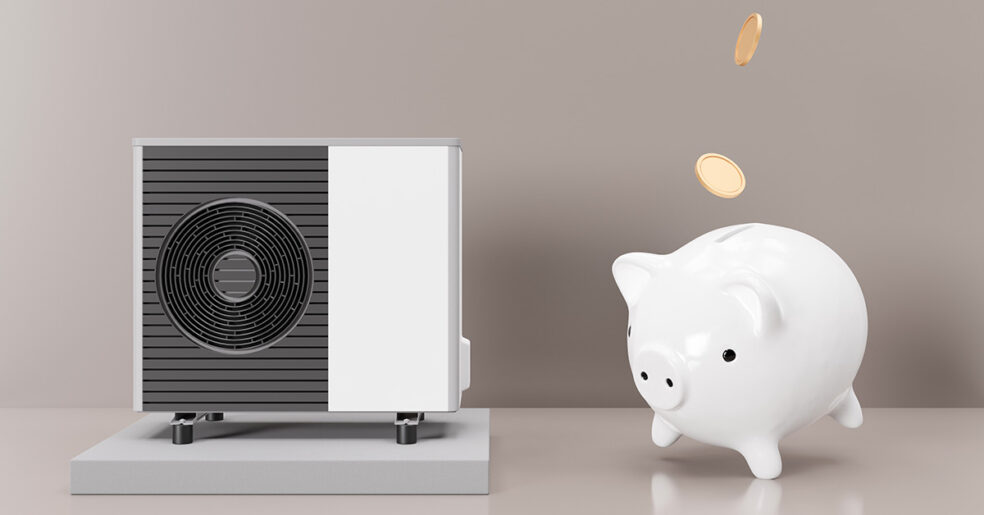
Good news for property owners: the German government has agreed on subsidies for replacing heating systems. For owners, this means planning certainty regarding government funding for switching to a climate-friendly heating system. But what exactly is subsidized, and to what extent?
"Location, location, location" is no longer the motto. Even properties in prime locations face price reductions if they have poor energy efficiency; otherwise, they won't find a buyer. Energy efficiency has now become almost equally important as location. This is because property buyers are required to renovate their purchased property to improve its energy efficiency within two years.
It can be advantageous for property sellers to carry out energy-efficient renovations before selling their property to avoid price reductions. Government subsidies are available for energy-efficient renovations, for example from the KfW (German Development Bank) or the BAFA (Federal Office for Economic Affairs and Export Control) .
Subsidies are also available for replacing your heating system. Seek advice from both an independent energy expert and a real estate expert. While one can tell you which measures are truly necessary and worthwhile, the other can advise you on how these measures will affect the value of your property.
What does the funding look like?
Since December 29, 2023, heating system replacements can be commissioned. From the end of February 2024, owners can then retroactively apply for funding from KfW. The GEG (Building Energy Act) provides basic funding of 30 percent of the investment costs for replacing old, fossil fuel heating systems with new heating systems based on renewable energy in existing buildings. This includes heat pumps, solar thermal systems, and biomass heating systems.
In addition, there is an income bonus of 30 percent of the investment costs. This is available to owners with a taxable annual household income of up to €40,000. Furthermore, a speed bonus of 20 percent of the investment costs is granted as an incentive for early retrofitting. Starting in 2029, this bonus will be reduced by three percent every two years until it is phased out in 2037.
These bonuses can be combined, but only up to a maximum subsidy rate of 70 percent. The maximum subsidy for replacing a heating system is €30,000. This applies to a single-family home or the first apartment in a multi-family building. The maximum subsidy for the first apartment is €21,000.
No coercion
In conclusion, it should be noted that the Building Energy Act (GEG), which also regulates heating subsidies, does not mandate any renovations. No one is forced to replace their heating system unless it is irreparable or older than 30 years and the chimney sweep says it must be replaced.
Would you like to know how an energy-efficient renovation will affect the value of your property? Contact us! We'd be happy to advise you.
Notice
For the sake of readability, this text uses the generic masculine form. Female and other gender identities are explicitly included where relevant to the statement.
Legal notice: This article does not constitute tax or legal advice for any specific case. Please consult a lawyer and/or tax advisor to clarify the facts of your individual situation.
Photo: © olgaguiskaja@gmail.com/Depositphotos.com
About the author

Harry Mohr
Real estate agent (Chamber of Industry and Commerce)Harry Mohr, author of this article