
Can I afford to build a house now?
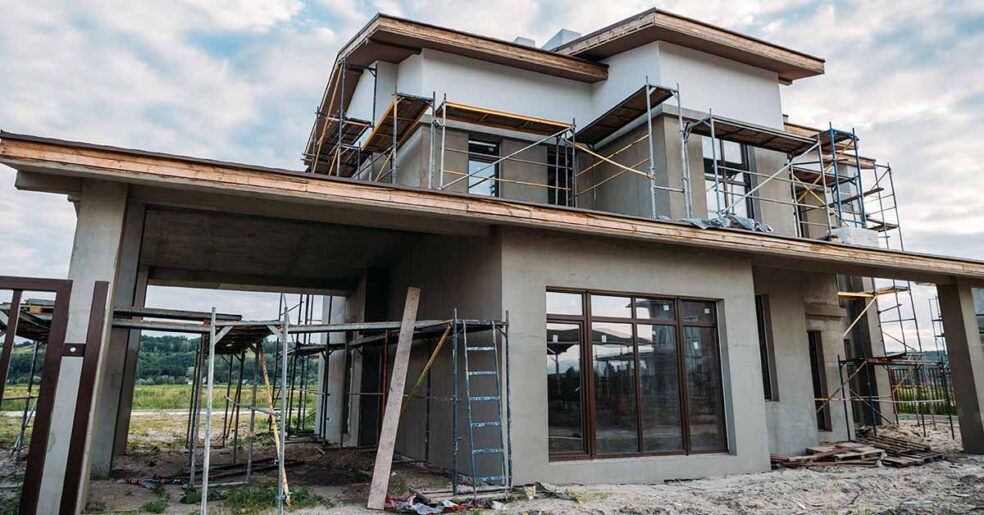
Inflation, rising interest rates, and a shortage of skilled workers have significantly increased construction costs. Not least because of the seemingly difficult financing conditions, many are hesitant to build their own home. Is financing a house construction currently a sensible option?
According to the Federal Statistical Office (Destatis), building permits for single-family and two-family houses plummeted by more than a third (35.1 percent to 22,600) and by more than half (53.5 percent to 6,500) respectively in the first five months of 2023 compared to 2022. The Federal Statistical Office attributes this primarily to increased construction costs and the currently less favorable financing conditions.
Should you build or buy an existing property?
Buying an existing property can be an alternative. Currently, a rising supply coincides with falling prices. More expensive financing loans are forcing many property sellers to adjust their asking prices to the market in order to find any interested buyers at all. Many people aren't even inquiring about properties right now, even though they still desperately want to own one. This has led to many property sellers being more willing to negotiate than they were a year ago. As a result, purchase prices for properties and financing costs have been able to converge again.
The situation is more complicated when it comes to building a house. Raw materials and labor costs are what they are. Whether and when costs will decrease again remains to be seen. On the other hand, there are government subsidies available for new home construction if the property is built according to current energy efficiency standards. However, subsidies are also available if buyers renovate their existing property to improve its energy efficiency, which they are legally obligated to do within two years of the purchase date.
What do I need to consider when financing a construction project?
Anyone who wants to build their property according to their own ideas should pay attention to the following:
Before you make concrete plans to build a house, you should carefully plan your budget. Take your current housing expenses into account, as you'll need somewhere to live until the house is finished. The closing costs for notary fees, land registry fees, real estate agent commissions, taxes, and insurance should also be included in your calculations.
The more equity you contribute, the lower the loan amount you'll need. Your equity should be around 30 percent of the property's purchase price. Keep in mind that banks don't finance closing costs; these must be covered by your equity.
Get advice from a professional
For financing matters, be sure to consult an independent financial expert. They can tell you how much you can afford to build. For questions about the property itself, you should seek advice from a reputable local real estate agent. They know where building plots are available and how much they cost. They might even already have a suitable property in their database. If building isn't right for you after all, they can find a suitable existing property.
Are you looking for support with building or buying a property? Contact us! We'd be happy to advise you.
Notes
For the sake of readability, this text uses the generic masculine form. Female and other gender identities are explicitly included where relevant to the statement.
Legal notice: This article does not constitute tax or legal advice for any specific case. Please consult a lawyer and/or tax advisor to clarify the facts of your individual situation.
Photo: © AllaSerebrina/Depositphotos.com
About the author

Harry Mohr
Real estate agent (Chamber of Industry and Commerce)Harry Mohr, author of this article