
EU renovation obligation – what owners need to know
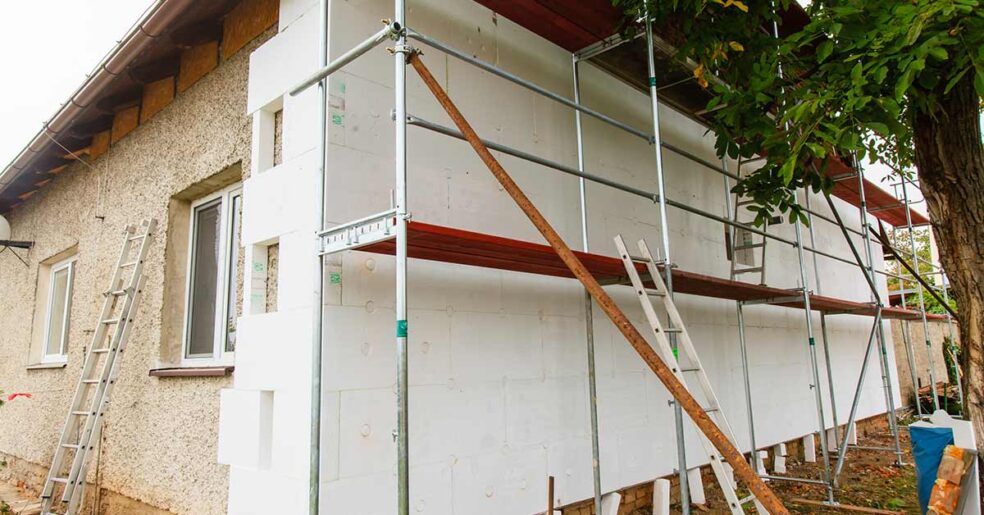
The European Parliament has adopted the directive on the energy-efficient renovation of residential buildings. What this means for property owners depends on its implementation in Germany. What do property owners need to know now?
According to the European Commission, buildings are responsible for 40 percent of energy consumption and around one-third of greenhouse gas emissions in the EU. To meet the EU's climate targets, the European Parliament has approved the Commission's proposal for building renovations. What does this mean for property owners?
Will I be forced to carry out renovations?
Ciarán Cuffe, the EU's chief negotiator, says that there are no fundamental obligations to renovate individual buildings. The specific impact of the directive depends on how the individual EU member states – including Germany – implement it.
The challenge for the German government now is how to meet the requirement that the energy consumption of residential buildings must be reduced by 16 percent by 2030 and by at least 20 percent by 2035.
One plan proposes that the properties with the worst energy efficiency be renovated first; another proposes that already well-insulated buildings be brought up to an even better standard.
Are there any exceptions?
EU member states can exempt agricultural buildings and listed buildings from these requirements. Buildings that are uneconomical to renovate or protected due to their special architectural or historical value, such as churches, can also be exempted. Holiday homes can also be exempted.
Is my property losing value now?
Critics fear that the introduction of minimum standards for many properties could lead to a significant drop in value. They also foresee financial hardship for many owners. However, this too depends on how the federal government implements the directive.
Can I get funding for energy-efficient renovations?
Government subsidies are available for energy efficiency improvements. These can include allowances, tax breaks, lower interest rates, or grants that do not need to be repaid. The KfW Development Bank and the Federal Office for Economic Affairs and Export Control (BAFA) are the central contact points for such funding. In addition, some federal states offer their own supplementary support programs. It is always recommended to seek the advice of an independent energy consultant, who can be arranged through a professional real estate agent.
Would you like to know if your property is subject to renovation requirements and how this affects its value? Contact us! We'd be happy to advise you.
Notes
For the sake of readability, this text uses the generic masculine form. Female and other gender identities are explicitly included where relevant to the statement.
Legal notice: This article does not constitute tax or legal advice for any specific case. Please consult a lawyer and/or tax advisor to clarify the facts of your individual situation.
Photo: © rades/Depositphotos.com
About the author

Harry Mohr
Real estate agent (Chamber of Industry and Commerce)Harry Mohr, author of this article