A new fascination with the countryside?
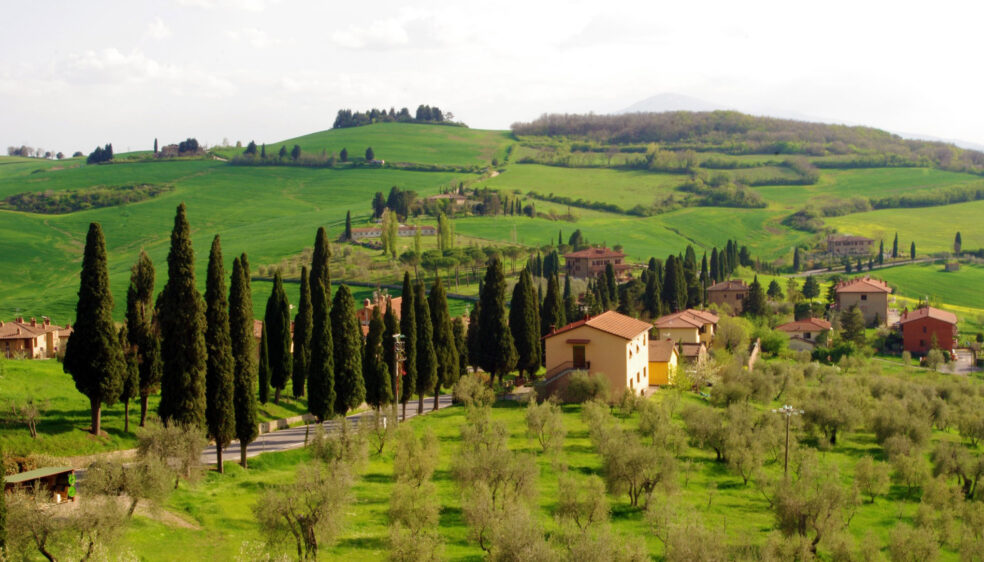
Since the start of the coronavirus crisis, working from home has become the norm for many employees. In large parts of the economy, this new work model has functioned so well that working from home will likely remain a permanent fixture of everyday work life even after the pandemic. Experts also see this development as an opportunity for rural areas, because those who don't have to commute to the office every day will be more willing to accept longer commutes. This could ease pressure on housing markets in major cities and make surrounding regions more attractive.
A legal right to work from home is unlikely to be introduced for the time being – the draft legislation by Labor Minister Hubertus Heil (SPD) was blocked by the Federal Chancellery. However, it is possible to implement work-from-home arrangements without legal mandates: A survey conducted by the Munich-based Ifo Institute among nearly 800 HR managers revealed that 73 percent of companies that allowed their employees to work from home during the coronavirus crisis intend to continue to rely more heavily on remote work after the crisis.
Significant savings potential
Working from home has also proven financially advantageous for many employers: While employers are required to reimburse any costs associated with home offices, significant savings can still be achieved, as office space is particularly expensive in large cities. According to calculations by DZ Bank, an average 30-square-meter workspace costs up to €9,000 per employee annually. For prime locations in metropolitan areas like Berlin, Frankfurt, or Munich, costs can even exceed €15,000. Large corporations have already recognized this potential for savings; for example, Siemens allows around 140,000 employees worldwide to work remotely two to three days a week.
Of course, the new work model also has disadvantages for employers and employees, as personal contact in the office is at least limited – and with the loss of team spirit, identification with the company could also diminish, cautions Michael Voigtländer, real estate expert at the German Economic Institute (IW). Furthermore, the home office environment is not ideal for every employee. However, Voigtländer also assumes that there will be a new balance between work and home life, and thus a change in housing patterns.
New perspectives for the surrounding area
Working from home opens up new perspectives for the areas surrounding cities, as living in the countryside is not only relaxing but also more affordable: After all, 32 percent of young adults already have less money available due to the pandemic and reduced working hours, as an LBS survey shows. For households with children, this figure rises to 41 percent. According to the survey, almost a third of employees plan to reduce their living expenses if they move in the future. And for those who don't have to be physically present at the office every day, a slightly longer commute is also worthwhile.
Working from home could therefore become a development aid for rural areas, as people there need good infrastructure with schools, daycare centers, fast internet, and some cultural offerings, Voigtländer points out, highlighting the advantages of this new trend. The expanded catchment area also has a significant advantage for metropolitan areas, because if the housing market in urban centers is relieved, further price increases in the real estate market could at least slow down.
Voigtländer, however, does not expect a sweeping exodus from cities: "The metropolitan areas will remain attractive, as service sector jobs are being created in the cities and highly qualified people are being attracted."
Sources: faz.net, focus.de, zdf.de, handelsblatt.com, Absolventa.de, lbs.de
About the author

Harry Mohr
Real estate agent (Chamber of Industry and Commerce)Harry Mohr, author of this article