
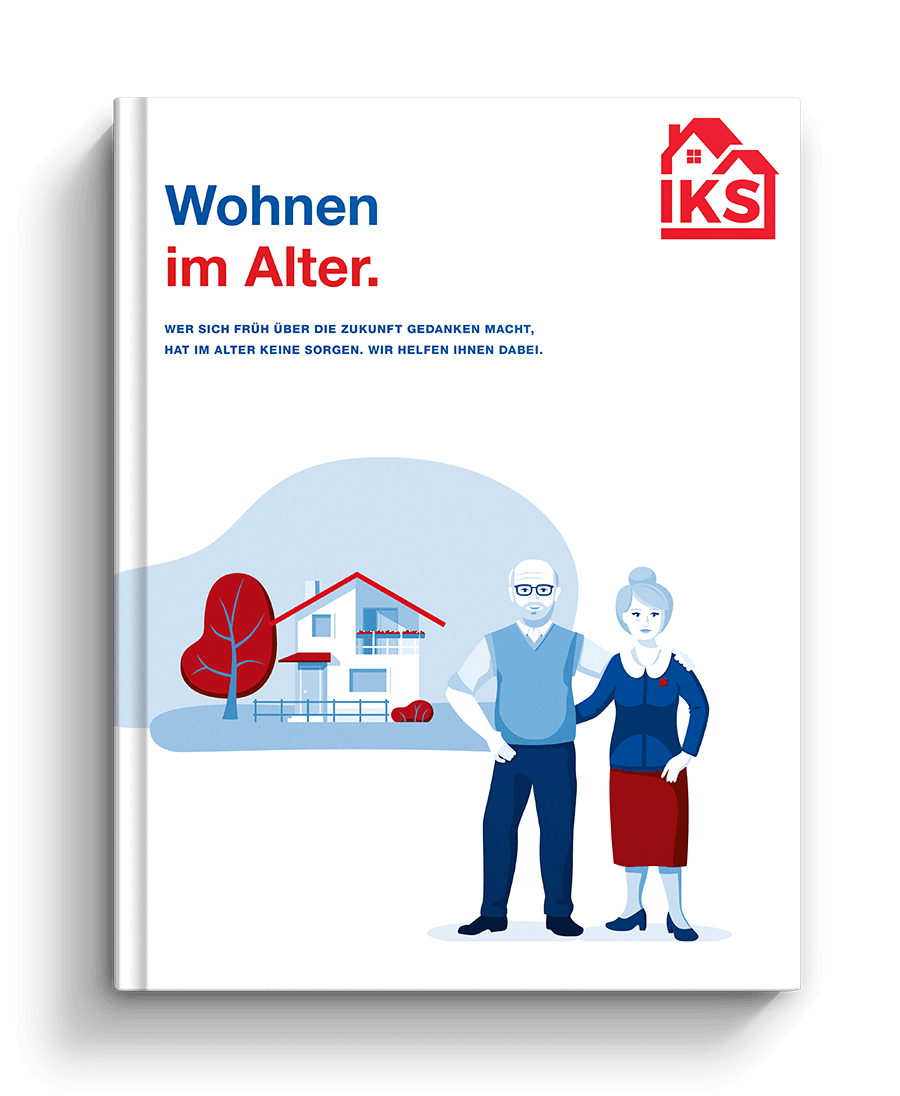
The children have left home, and suddenly two floors seem like one too many. The garden also requires more and more work, and the stairs seem to get higher every day. For many people, the question arises whether their home will still be suitable for their needs as they get older.
Many people who have reached retirement find that their house has become too big for them. The climb from the basement to the first floor is becoming increasingly difficult. Some rooms are hardly ever entered except for cleaning. Cleaning in general is becoming more and more strenuous, as is gardening. Therefore, many older people wonder why they should even bother with this work anymore. On the other hand, most people (a suggestion, since "many" also appears in the preceding and following sentences) find it difficult to hand over their home to strangers. Too many fond memories are tied to it. Their children grew up here. Every room holds stories. Who can part with such a home? But then again: How can such a house be lived in and maintained when one's own strength is waning?.
To be able to continue living in familiar surroundings, one can of course convert one's own house to be barrier-free:
- Widening of house and apartment doors
- Removal of thresholds, ramps instead of steps
- Shower conversion to floor level
- Installation of a stairlift
- Installation of non-slip flooring
- Installation of support and holding systems, such as handles or seats in showers and bathtubs
Three things are important when converting a building to be barrier-free:
- Plan ahead, while you as the owner are still fit and healthy
- Careful consideration of which renovation measures are sensible
- The execution of the renovations should be left to experts
However, it's important to keep in mind that renovations don't necessarily increase the property's value. At the same time, age-appropriate renovations aren't exactly cheap. Savings are often necessary. Furthermore, homeowners may have to live on a construction site for weeks. If renovating a house isn't possible or practical, moving to an age-appropriate apartment might be a better option. Selling the house could certainly generate enough money for a nice apartment plus some savings for travel or other things you've always wanted to treat yourself to.
Would you like to know if adapting your property for accessibility would be worthwhile? Contact us. We'd be happy to advise you.