
Cosmetic repairs – a Solomon-like judgment?

In its ruling of July 8, the Federal Court of Justice (BGH) reached a compromise on a contentious issue: Tenants who have moved into an unrenovated apartment must bear half of the renovation costs if the condition of the apartment has significantly deteriorated over the course of a long-term tenancy.
The recent ruling by the Federal Court of Justice (BGH) regarding the allocation of costs for cosmetic repairs received considerable media attention, as the question of who is responsible for repainting walls, ceilings, radiators, doors, and window frames has often led to disputes in the past. This was also the case in the two Berlin proceedings on which the ruling is based (judgments of July 8, 2020, VIII ZR 163/18 and VIII ZR 270/18).
The discord arose, not least, because the Federal Court of Justice (BGH), in its 2015 ruling, left open the question of whether tenants of unrenovated apartments could demand that landlords carry out cosmetic repairs. The only clear ruling at the time was that tenants could not be obligated to pay for repairs such as painting and wallpapering themselves and that corresponding clauses in the rental agreement were invalid.
The recent ruling places equal responsibility on both landlords and tenants. The Federal Court of Justice (BGH) decided that while long-term tenants can compel their landlords to renovate – provided the condition of the apartment has significantly deteriorated since they moved in – they must themselves contribute half of the costs.
On the one hand, it would be unfair to the tenant to be forced by a renovation clause to also remove traces left by the previous tenant. Moreover, the tenant would be returning the newly renovated apartment to the landlord in better condition than when they moved in. On the other hand, the federal judges now argue, it is equally unfair to burden the landlord with the full costs, especially since the tenant knew what they were getting into when they moved into the unrenovated apartment. With a renovation at the landlord's expense, the tenant would therefore receive more than they found when they moved in. A 50/50 cost split thus appears appropriate so that both parties can be fairly compensated.
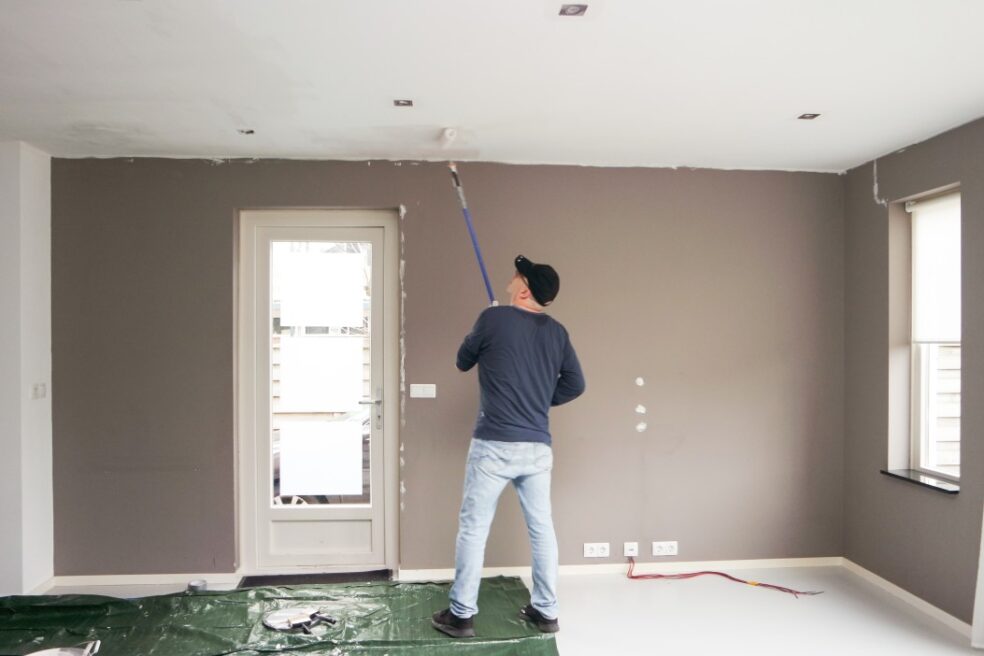
Many tenants will likely choose to renovate their apartments themselves in the future, as landlords are generally required to hire tradespeople for cosmetic repairs, which can be expensive. According to the ruling, only if the landlord fails to take care of the repairs and falls into arrears can the tenant renovate themselves and claim half the costs from the landlord.
Neither the landlords' nor the tenants' lobby seems entirely satisfied with the compromise. The German Tenants' Association (DMB) criticizes the ruling as "incomprehensible." It argues that granting tenants the right to cosmetic repairs while requiring them to contribute to the costs contradicts the law. DMB President Lukas Siebenkotten fears that the ruling will lead to further disputes over cost sharing instead of promoting legal certainty.
The property owners' association Haus & Grund also predicts problems in practical implementation and growing mistrust between landlords and tenants. Haus & Grund President Kai Warnecke called the ruling a "devastating signal" with regard to housing costs. It is generally assumed that factoring renovation costs into rents will lead to rising rents.
Sources: juris.bundesgerichtshof.de, mieterbund.de, focus.de, heute.de, anwalt.de, hausundgrund.de, haufe.de, tagesschau.de
About the author

Harry Mohr
Real estate agent (Chamber of Industry and Commerce)Harry Mohr, author of this article