
Calculating living space is a frequent point of contention


How big is the apartment really?
When renting and managing a property, the living space is a crucial factor, not only for determining the rental price but also as a key for allocating modernization and operating costs to the individual tenants. Accurately determining the living space is also essential if you intend to raise the rent, as comparison with the local market rent is only possible based on the price per square meter.
Since rent and additional costs depend significantly on the size of the apartment, it is not surprising that the calculation of the living space is a frequent point of contention between landlords and tenants, which not infrequently ends up in court.
Ten percent is the limit
If the tenant can prove that the rented apartment is more than ten percent smaller than stated in the lease, they are entitled to a rent reduction. According to Section 536, Paragraph 1 of the German Civil Code (BGB), such a discrepancy constitutes a defect. The overpaid rent must be refunded. Furthermore, the tenant can terminate the lease without notice for this reason, pursuant to Section 543, Paragraph 2 of the German Civil Code (BGB).
The living space regulations (WoFIV), which have been in effect since January 1, 2004, define which rooms and areas are included in the living space calculation. The floor areas of all rooms, as well as kitchens, bathrooms, toilets, hallways, entrance halls, and ancillary rooms, are all included. This also includes broom closets, pantries, and storage rooms. Conservatories and fully enclosed swimming pools are also considered living space.
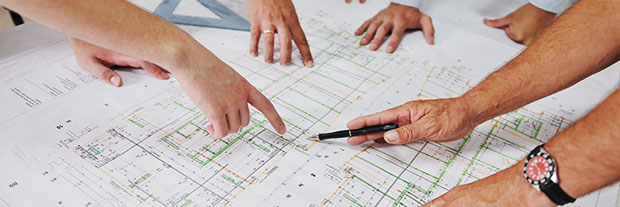
What else needs to be taken into account?
The floor area naturally includes built-in furniture and permanently installed fixtures such as fitted kitchens, built-in wardrobes, tiled stoves, cookers, radiators, showers, bathtubs, bidets, and baseboards on the floor or ceiling. Balconies and terraces may generally only be counted at one-quarter of their area. If they are elaborately constructed or located in a very desirable area, they may be counted at up to a maximum of 50 percent. The same applies to loggias and roof gardens.
What is not included in the living space
Basements, laundry rooms, drying and boiler rooms, garages, and sheds are not included in the living space. Chimneys and wall projections, freestanding pillars, as well as floor-to-ceiling columns and cladding exceeding 0.1 square meters, door recesses, and false walls are deducted from the living space. Staircases with more than three steps are also not included in the floor area. Likewise, door or wall recesses less than 13 cm deep that extend to the floor, or window recesses that do not reach the floor, are not included.
The ceiling height must also be correct
However, it's not just the floor area of a room that matters; the ceiling height is also crucial. Apartments with sloping ceilings must therefore be calculated differently than those with vertical walls.
To be fully counted, the clear height of a room or part of a room must be at least two meters. Areas where the ceiling height is less than one meter are not included in the calculation. Room heights between one and two meters are added to the total living area at 50 percent.
Sources: Haus & Grund, Tenants' Association
German Civil Code (BGB)
About the author

Harry Mohr
Real estate agent (Chamber of Industry and Commerce)Harry Mohr, author of this article