
Bleeding a radiator is child's play
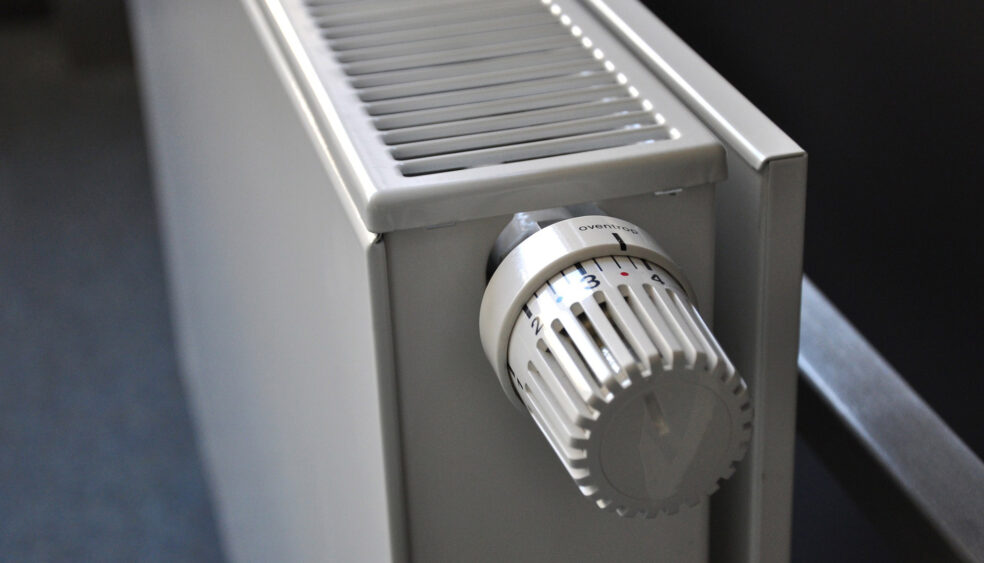
Besides a lack of hydraulic balancing, air in the radiator can cause it to heat ineffectively or even remain cold. You can find out how to properly bleed your radiators here.
When should you bleed your heating system?
If your radiators remain cold, you hear a gurgling sound coming from them, or if a radiator has just been replaced, you should definitely bleed them. A routine bleeding of the radiators before the main heating season is also a good idea. Bleeding is completely safe, and even if it turns out there was no air in the radiator, you haven't lost anything by bleeding it. On average, bleeding each radiator only takes about five minutes.
What tool is needed to bleed a heating system?
Besides a thin-walled container (e.g., an empty yogurt container) to catch any escaping water, and a rag in case water drips, you only need a radiator bleed key. You can find these at any hardware store or plumbing supply shop. The bleed key is practically free and is already standard equipment in many households. It's generally a standard square key; in some cases, the bleed valves can also be opened with a flathead screwdriver.
How do I ventilate a heating system?
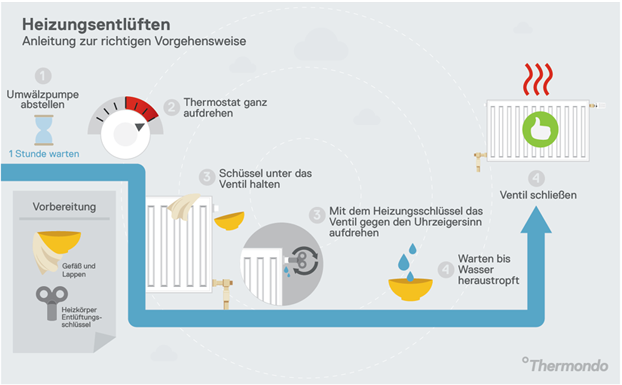
Preparation
1.) Turn off the circulation pump: When the pump is running, the air in the system and pipes is circulated, reducing the chance of complete bleeding. Therefore, it is important that you turn off the circulation pump before bleeding the system. If you are a subtenant and do not have access to the circulation pump, simply close the heating circuit in your apartment.
2.) Wait at least one hour to allow the air time to collect in the radiators.
3.) Turn the radiators up to maximum.
Venting process
4.) Take the radiator key: The bleed valve is located on the opposite side of the thermostat. Using the radiator bleed key, turn the valve a quarter to half a turn counterclockwise. Hold the container as close as possible to the valve and have a rag ready.
Tip: On towel radiators for the bathroom, the valve is located in the upper rear area.
5.) Release the air: As soon as you hear a slight hissing sound, air is escaping from the radiator, as intended. Do not open the valve any further. Once a steady stream of water flows from the opening, the bleeding of the radiator was successful and you can carefully close the valve again.
6.) On to the next radiator: Now repeat this process on all radiators in your apartment or house.
After bleeding the radiators, check the pressure in the heating system. If it is too low, either add water yourself or ask a plumber for assistance. You can read the pressure on the heating system's pressure gauge. The ideal pressure is usually indicated by color, making it easy to assess.
Source: Image and text https://www.thermondo.de
About the author

Harry Mohr
Real estate agent (Chamber of Industry and Commerce)Harry Mohr, author of this article