An old housing model revived: The multigenerational house
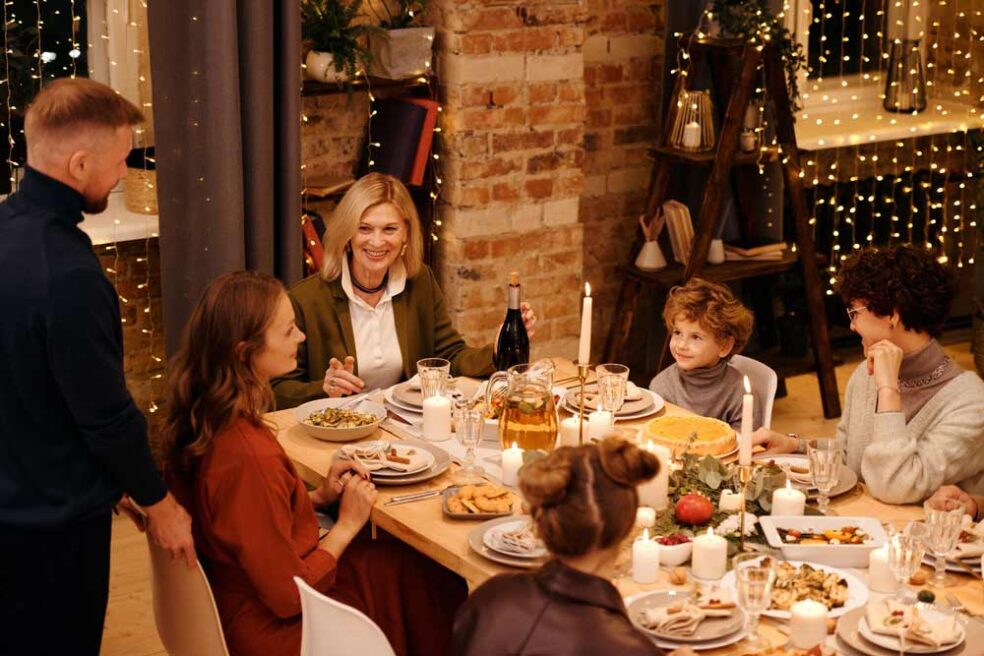
Contrary to the decades-long trend towards more single-person households and small families, the traditional multigenerational home model has recently experienced a small renaissance. More and more people are apparently discovering how much easier everyday life is to organize when parents, grandparents, and children live together in one house. Experts consider the multigenerational home to be the ideal living environment. For owners of two-family or multi-family homes, it can even be a tax-saving model.
The advantages of this living arrangement are obvious: Grandparents receive help with everyday tasks from their children, and in return, they help with childcare. Seniors, in particular, are often very happy to see their family not just during occasional weekend visits, but to have them around constantly. Likewise, children benefit in every way from the experience of the older generation. The multigenerational home proves especially advantageous when family members become dependent on care and assistance. For family members living under one roof, caring for relatives is easier to balance with work and daily life. If this prevents a move to a nursing home, it means not only greater independence but also significant cost savings.
Tax advantages
From a tax perspective, converting a two- or multi-family house into a multigenerational home can also be advantageous. For owners who, for example, live partly in a two-family house themselves and partly rent it out, there are attractive tax deduction opportunities. If family members move into the property, a rental agreement should definitely be drawn up. This way, the owner, who is also the landlord, receives rental income on the one hand, and can simultaneously claim depreciation and advertising expenses, as well as tax deductions for property maintenance and mortgage interest . Beyond the savings that the family as a whole gains through mutual support and the practical advantages of living together, owners of a multigenerational home can sometimes also save considerable sums in taxes.
Requirements for a multigenerational home
Different types of properties have different "destinies." Single-family homes designed for a young nuclear family often become too large when the children move out and the owners, now elderly, are left alone. A multigenerational home, on the other hand, shouldn't be too small. It's well known that conflicts are more common where people live in close quarters. Age differences, in particular, often lead to disagreements regarding child-rearing, household management, or daily planning. However, if the house offers a good mix of private spaces and communal areas, disputes can almost always be avoided. The multigenerational home model is therefore ideal for owners of a property large enough to truly accommodate the entire family. If you are among the elderly whose single-family home has become too large, however, it might be worth considering selling your house and, together with your children and grandchildren, looking for a larger property suitable as a multigenerational home.
Are you considering moving into a multigenerational home and unsure what to do with your current property? Contact us. We'd be happy to advise you.
No results found:
https://de.wikipedia.org/wiki/Mehrgenerationenhaus
https://www.caritas.de/glossare/mehrgenerationenhaus
Legal notice: This article does not constitute tax or legal advice for any specific case. Please consult a lawyer and/or tax advisor to clarify the facts of your individual situation.
Photo: © Nicole Michalou/Pexels.com
About the author

Harry Mohr
Real estate agent (Chamber of Industry and Commerce)Harry Mohr, author of this article