
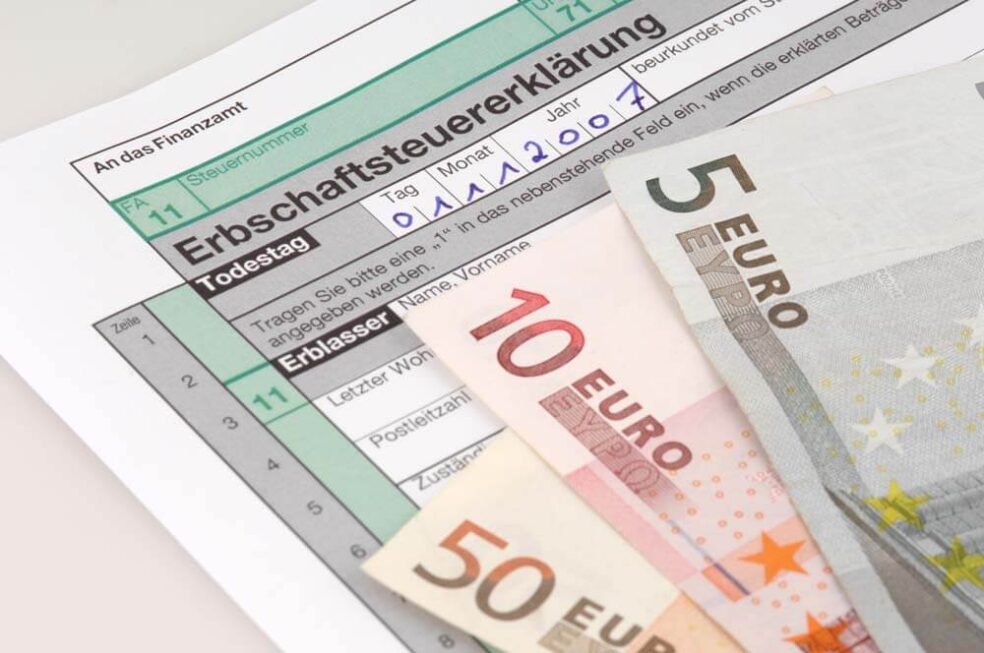
Anyone who inherits real estate or other assets in Germany generally has to pay inheritance tax. However, there are various exceptions and special provisions – especially for real estate transfers. As a general rule, the closer the family relationship, the less tax has to be paid on the transfer, because the tax-free allowances are high. The regulations are laid down in the Inheritance and Gift Tax Act (ErbStG).
Accordingly, spouses can inherit up to €500,000 tax-free. Children and stepchildren can claim an allowance of €400,000 from each parent, and grandchildren €200,000 from their grandparents. More distant nieces, nephews, and partners are entitled to an allowance of only €20,000. If the inherited assets exceed this amount, taxes must be paid on the excess.
An example illustrates this: If a house with a market value of €550,000 is inherited by a child, the child must pay inheritance tax of eleven percent on a total of €150,000 after deducting the tax-free allowance (€400,000) (tax bracket one). This would amount to €16,500. Those who cannot pay the sum in one go can often arrange an installment plan with the tax office.
From the date of death, the heirs have three months to report the inheritance to their tax office. Often, the tax office has already been informed in advance, for example by the registry office. Courts and notaries also report past notarizations that may be relevant for inheritance tax purposes. Furthermore, banks, building societies, and insurance companies automatically inform the tax authorities when a customer dies.
The tax burden also decreases the closer the relationship between the deceased and the heirs. The most favorable tax rate is therefore found in tax bracket one, which includes spouses, parents, and children.
When transferring real estate, a special rule applies: spouses or registered civil partners who inherit the property do not have to pay inheritance tax, provided they live in it and use it themselves. Furthermore, they are not allowed to sell or rent the house or apartment for ten years after the inheritance. The only exception is a necessary move to a nursing home.
This regulation is intended to allow the widow to continue living in her familiar home after the death of her spouse without additional financial burden.
If the property passes to a child after the death of the second parent, this tax exemption only applies up to a living area of 200 square meters. Inheritance tax must be paid on any additional inherited areas if their tax-free allowance for children exceeds €400,000.
Other, more distantly related heirs do not benefit from this special feature.
You don't know how much your inherited property is worth? We'd be happy to advise you.
Photo: PeJo29